About a Bee
Gardening for the little pollinators
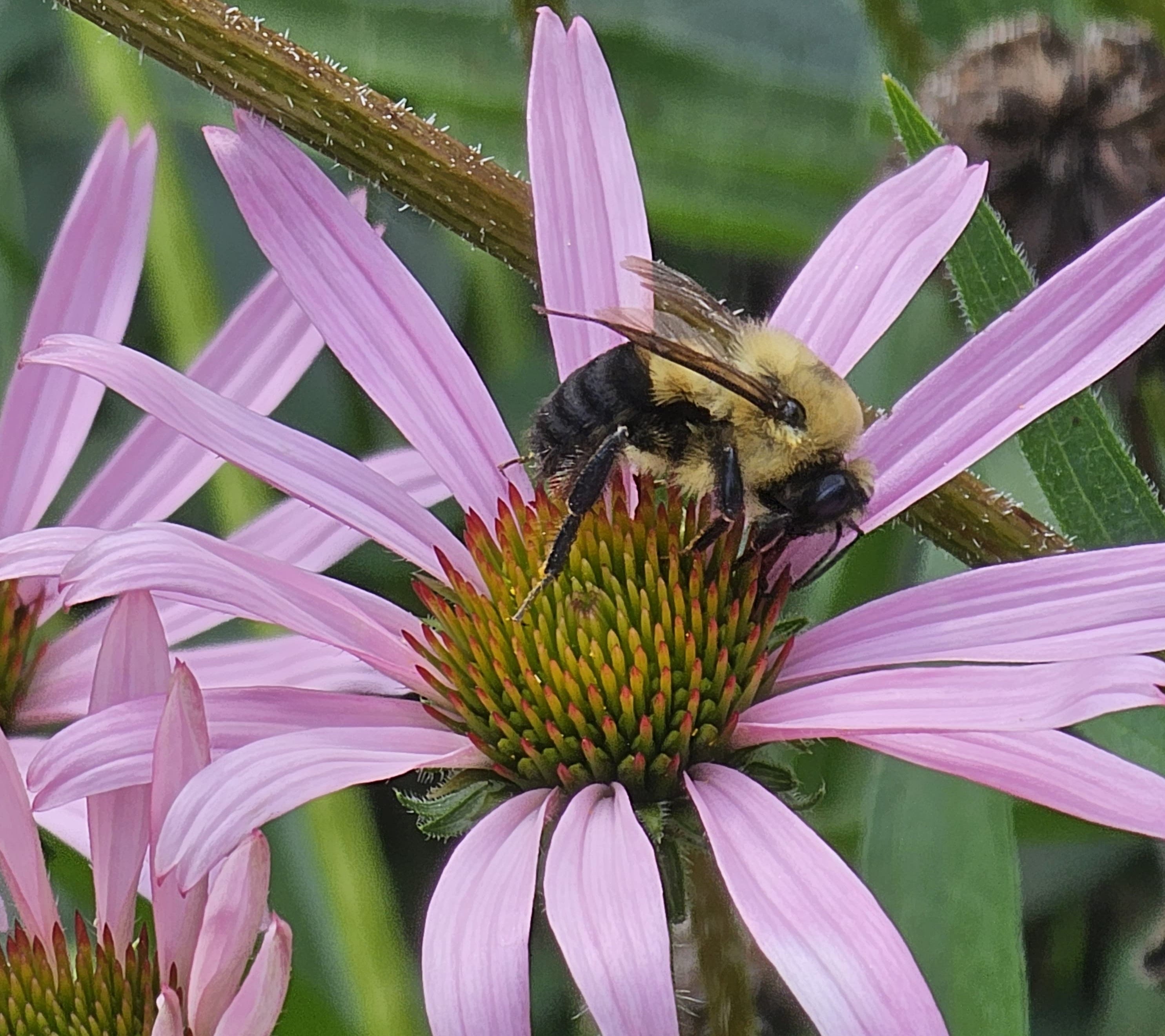
Now that I am back home in Omaha and working again in the (Steve’s) garden, I am noticing the bees. They are so happy, busy, and drunk on pollen. They even seem a bit greedy, looking weighed down enough with pollen to return to the hive, but continuing about their business as if gravity does not affect them. Do you know which native species of bees you see feeding on the nectar in your garden? Do you garden for yourself, the neighbors, the butterflies, the birds, or maybe the rabbits? I love tomatoes, so those are for me and Susan and not for the rabbits, but in Steve’s garden - everything else is grown, tended, and nurtured for the bees. If not for them, there would be no tomatoes.
Wind and water are pollinators. So are flies. Moths, butterflies, wasps, beetles and bees are the most well-known. We need these pollinators to pay frequent visits to our non-ambulatory flower friends. But the bees are the master pollinators.
My grandfather raised honeybees on his farm in Manitoba. He ordered the bees from a catalog (can I order rabbit-predators from a catalog?), and they came by train each spring. It was hard to winter them over due to a Canada-cold basement, though he tried a few times. Usually, he had two to three hives. My own father recalls: “We had an extractor where you put the combs into holding brackets and spun the extractor by a handle that rotated the drum. The honey would fly out of the combs, run down the walls of the circular drum and then be drained off into cans or jars. Always good honey.” This process of extraction keeps the combs intact so they can be refilled by the bees.
Honeybees live in managed or wild hives with 20 - 50 thousand bees. The queen can live up to four years, and the hive will stockpile honey and survive the winter. If they sting you (or anything else), they die.
Bumblebees are plumper, cuter, and the more robust pollinator because of their ability to “buzz-pollinate” by flexing their flight muscles to shake pollen out of flowers. They are responsible for the existence of your tomatoes. They can sting multiple times without dying but will only attack if you piss them off.
May 20 is the recognized birthday of Anton Jansa (1734-1773), who is considered to be one of the pioneers of modern beekeeping. World Bee Day was established by the United Nations in 2017 to honor Anton and to raise awareness of the importance of bees as pollinators, and to apiculture - beekeeping - which is happening all over the world today. Even on the rooftops of buildings.
While walking along Barrington Street last September in Halifax, Nova Scotia, I stopped to notice the above sign in the window. I thought this was such a great idea - to place beehives on the rooftops of buildings. William, the beekeeper of the Maritime Centre rooftop, explains some of the differences between honeybees and bumblebees:
Five to ten percent of a honeybee hive is made up of drones. Drones are the male bees of the colony. You can tell a drone apart from the worker (female) bees by their appearance. Drones are significantly larger and have big, black, cartoon-like eyes. They are also extra buzz-y when they fly.
Bumblebees are another bee species that have a colony like Honeybees, but instead of a colony of thousands, these incredible pollinators tend to have colonies of around 300-400 bees. Bumblebees primarily make their nests underground and they also make honey - although it is not in the same quantity as Honeybees. Bumblebees produce small amounts of honey to feed their young and to feed their Queen during the active season, especially during periods when forage is sparse. They store them in these little wax “pots.” They also make something called “Bee Bread” which is a combination of pollen and nectar, which is essential for feeding their larvae.
The next time you are in your yard, garden, or neighborhood park, take notice of the bees. Talk to the bees. Determine if it is a bumble or honeybee and thank them for their efforts to keep you fed.
Blessings & Love,